Life Sucks in 1950
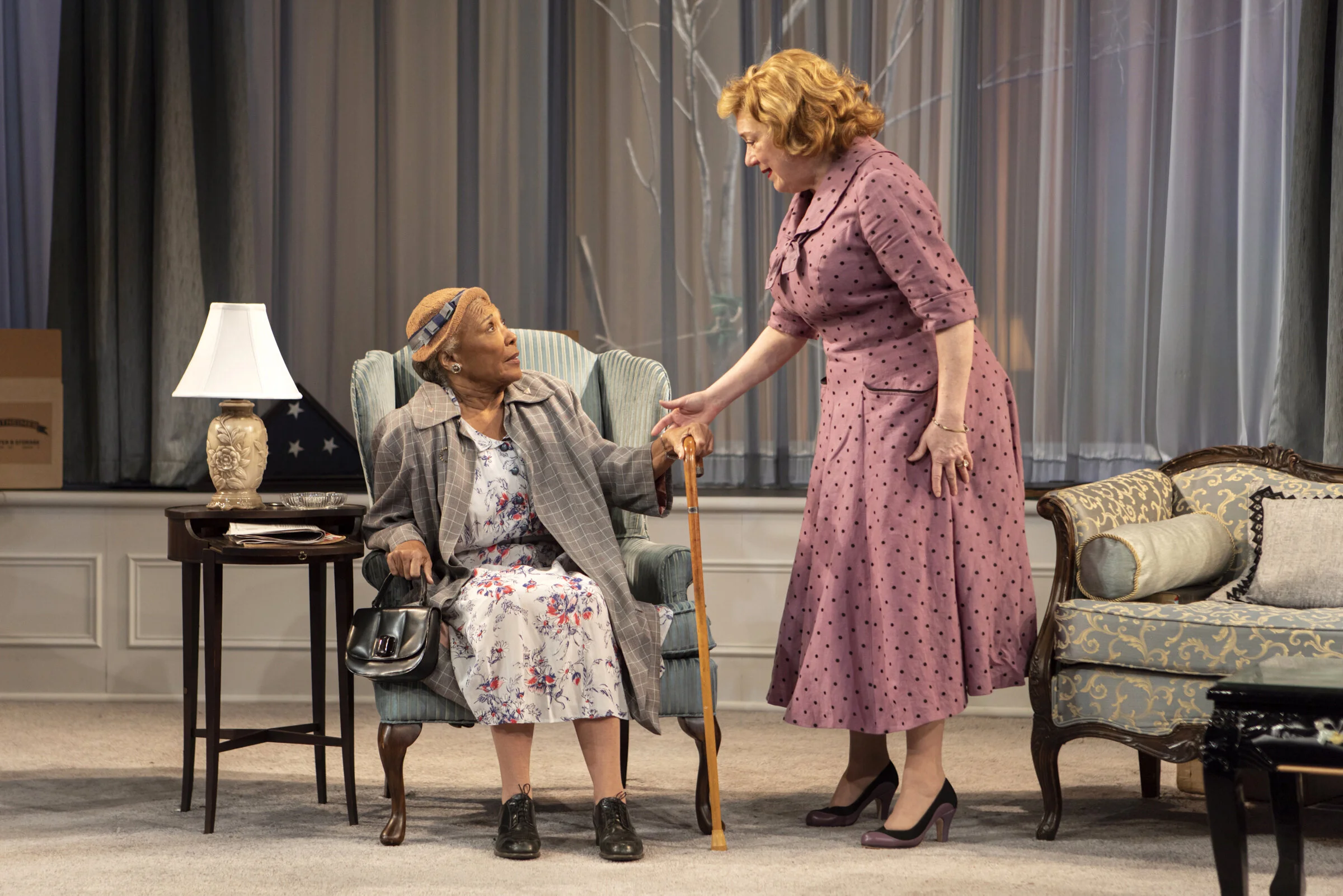
Poor Lily Dale Kidder (Kristine Nielsen, right)! Her only child is dead, her husband has lost his job, and she can’t think of much to say to her old housekeeper (Pat Bowie). Life sucks in Horton Foote’s “The Young Man From Atlanta” and three other Off Broadway productions that popped up in December.
While Broadway is busy with flashy openings (extravagant jukebox musicals, heralded London imports), Off Broadway goes its own way. In four December shows, from an artsy block of the East Village to an ex-church on the Upper West Side, we detected a bleak message. What can save us from life’s horrors? Not much.
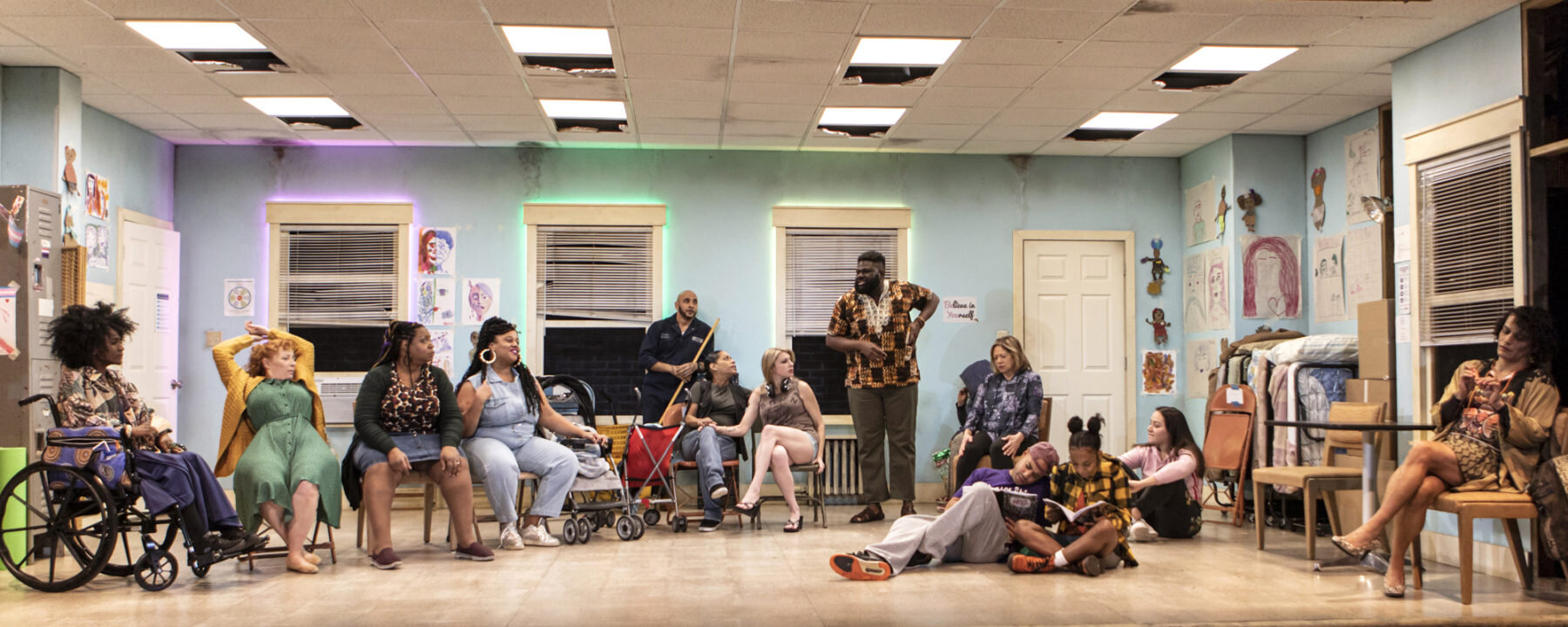
CHICK FIX Stephen Adly Guirgis’s “Halfway Bitches Go Straight to Heaven” takes place at a Manhattan women’s shelter. Scenic design by Narelle Sissons.
HALFWAY BITCHES GO STRAIGHT TO HEAVEN
SHOULD YOU FIND YOURSELF at a certain halfway-house women’s shelter in New York City, you could run into some intriguing characters: The transgender resident (some resent her for taking the place of a cisgender woman who could be helped there). The delicate blonde who is much happier these days, as a lesbian, but misses drugs and decides to shoot up one last time. Sarge, who loves the blonde and speaks the play’s most poignant line — at the very end. The caring mom who has Alzheimer’s and steals a goat. The theft is for a good cause, but it turns everyones life upside down.
This power-punch of a play is by Stephen Adly Guirgis, who won the Pulitzer Prize for “Between Riverside and Crazy.” It’s packed with fearless performances. It’s a co-production of the Atlantic and LAByrinth theater companies, and it may well return to New York on a different stage.
“Halfway Bitches Go Straight to Heaven,” by Stephen Adley Guirgis, directed by John Ortiz, Atlantic Theater Company, Linda Gross Theater, 336 West 20th Street, atlantictheater.org, 2 hours 45 minutes. Limited run. Closed on Dec. 22.

A DEATH IN THE FAMILY Horton Foote’s “The Young Man From Atlanta” takes place in Houston in 1950. Set design by Jeff Cowie.
THE YOUNG MAN FROM ATLANTA
GIVE ME A HANDSOME coffee table. Coordinated accent lamps. An elegant midcentury window treatment. No matter what wizardry some scenic designers have done with abstract sets, there’s something comforting and familiar in a set that spells out its accessories and knows its place. Because everything else in this revival of Horton Foote’s 1995 Pulitzer Prize winner, “The Young Man From Atlanta,” feels uncertain.
Here’s Aidan Quinn, back on the New York stage, as Will Kidder, a Southern husband and father who has just been kicked out of his longtime career — shades of “Death of a Salesman” — and Kristine Nielsen as Lily Dale, his sweet but naive and misguided wife. The most important thing about the Kidders: Their 37-year-old son is dead.
“He stopped at the lake to go for a swim,” Will says. Six months later, he can finally admit to himself that it was a suicide. And now that a close friend of his son, the titular “young man from Atlanta,” has arrived in Houston, hoping to make contact, Will is going to have to admit another truth. There was a reason his son had never married.
“The Young Man From Atlanta,” by Horton Foote, directed by Michael Wilson, Pershing Square Signature Center, 480 West 42nd Street, signaturetheatre.org. 2 hours and 5 minutes. Limited run. Closed on Dec. 15.

LOOK AT OUR RED STARS! Publicity photos for “Sing Street,” now running at New York Theater Workshop, feature quotations from the show’s rave reviews. Just in case we forget.
SING STREET
ABOUT TWO MINUTES IN, “Sing Street” felt a lot like “Once., the 2012 Broadway hit that won eight Tony Awards, including best musical. This makes sense, because “Sing Street” comes from a lot of the same people. And like “Once,” it’s based on a movie written and directed by John Carney. But there’s little point in telling you about the Off (Off) Broadway production, because it is reportedly completely sold out.
But there’s been an announcement: “Sing Street” is moving to Broadway. And not at some distant future time. Previews start on March 26, and opening night is April 19 at the Lyceum Theater. The reviews are so good that all the publicity photographs have them emblazoned right on the image (as you’ll see here).
The tag line for the 2012 movie really says it all: “Boy meets girl. Girl unimpressed. Boy starts band.”
“Sing Street,” set in 1980s Dublin, focuses on a 16-year-old boy, Conor (Brenock O’Connor), whose life has turned into misery (by teenage standards). He hates life in Dublin. His older brother, while a sweetheart, is agoraphobic. His older sister, the hard-working one is getting fed up with their parents’ pressure she’s thinking of dropping out of med school — or whatever bright path she’s on. And the parents have sudden financial problems that mean Conor has to transfer to a new — gasp! public! — school.
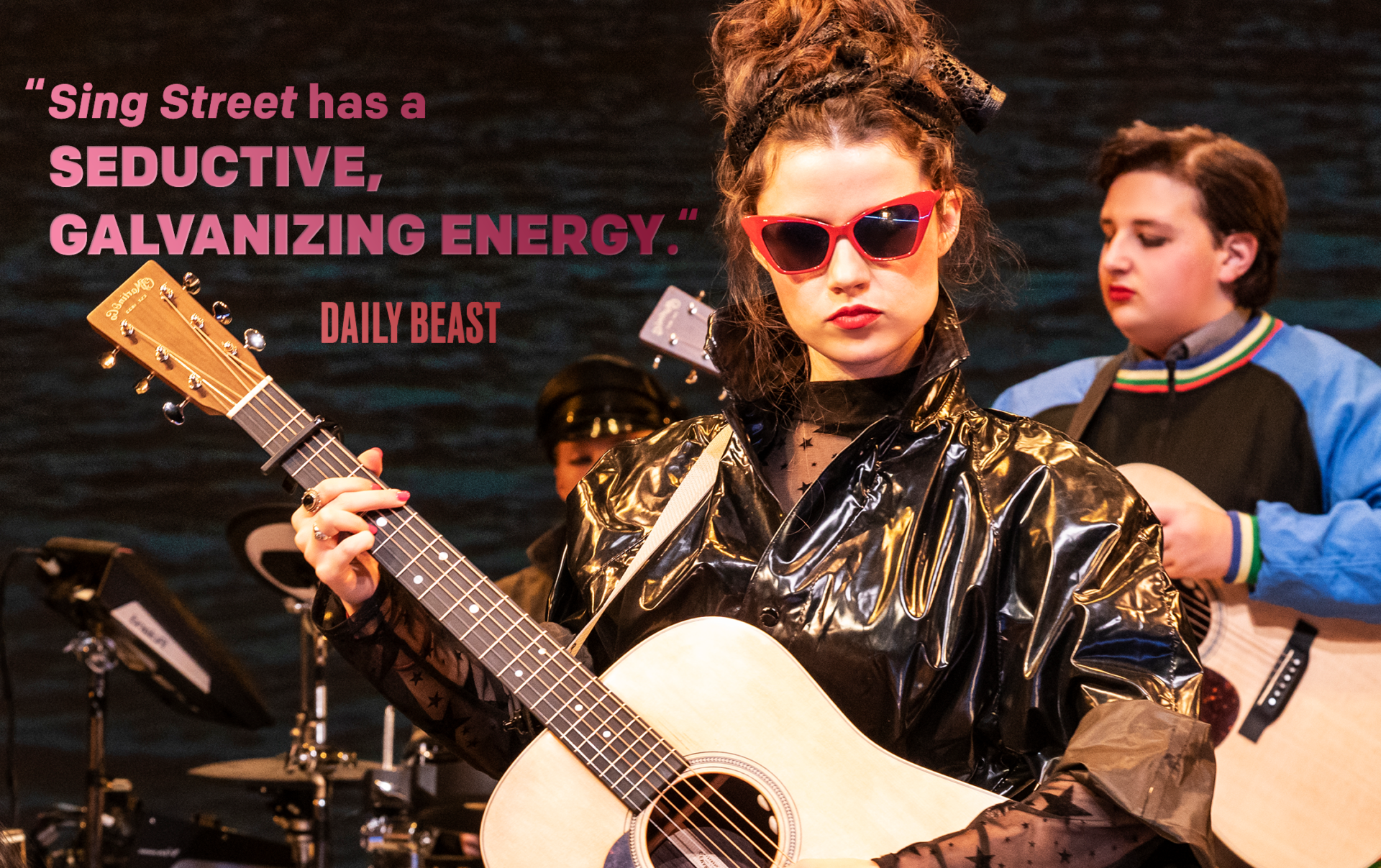
Well, thank God he spots a dazzling female student there: Raphina (Zara Devlin, in photo, in red-framed sunglasses). And mostly to impress her, he gets his new school pals together and they start their own new-wave-rock band. This brings them joy. This brings him love. What can possibly go wrong? Great music too.
“Sing Street,” by John Carney, Gary Clark and Enda Walsh, directed by Rebecca Taichman, New York Theater Workshop, TK East Fourth Street, newt.com. 2 hours 15 minutes. Limited run. Closes Jan. 26, 2020. Opens on Broadway (at the Lyceum Theater) on April 19.
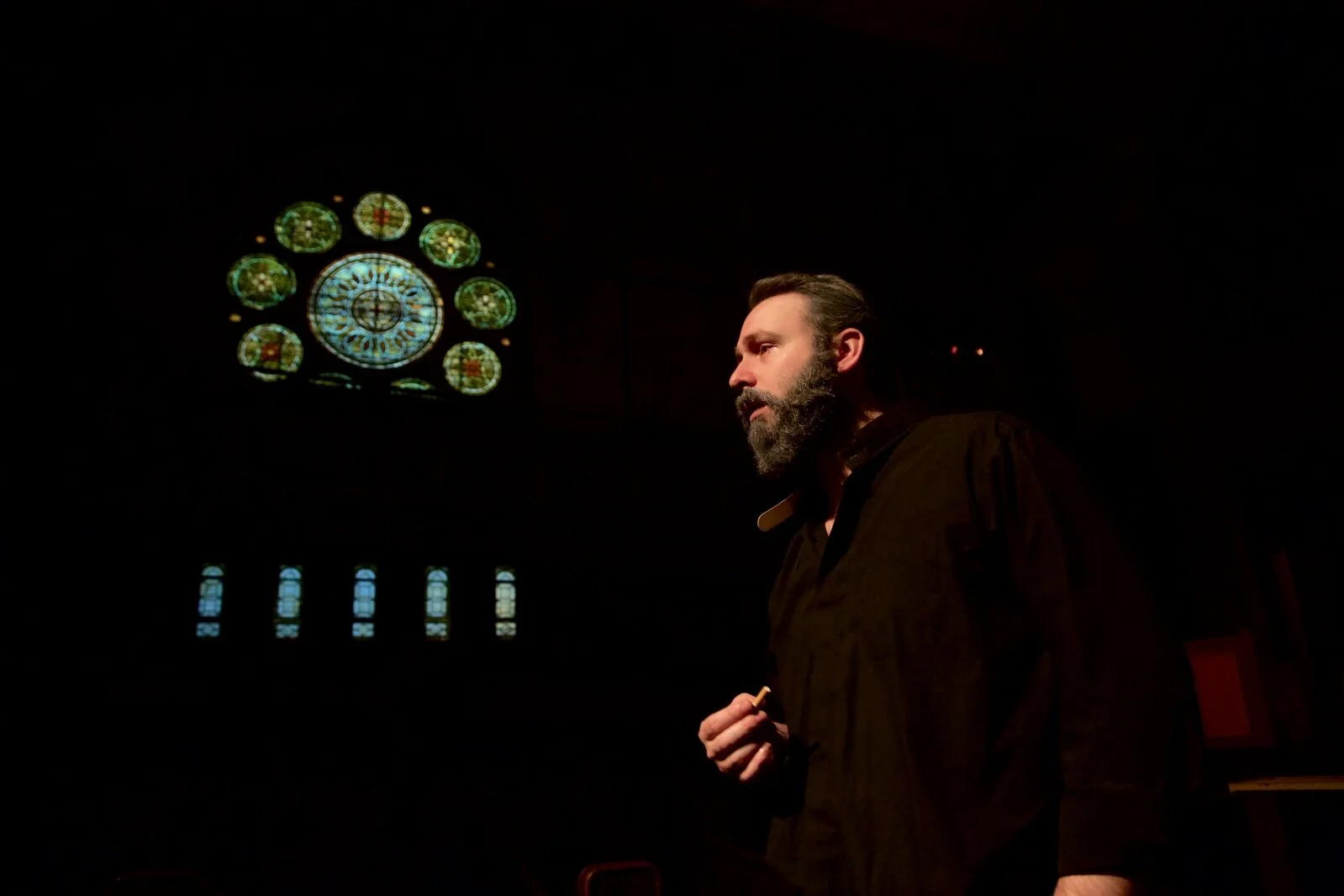
IN THE HEIGHTS Luke Edward Smith as a priest hiding out during the 1992 Washington Heights riots in “A City of Refuge.”
A CITY OF REFUGE
THE LAST THING I was expecting was Rudy Giuliani.
But there he was, in the news footage that opens Act I of “A City of Refuge.” It’s the Fourth of July weekend in 1992. Giuliani is 48, not yet the mayor of New York City, and quite unhappy with the current mayor, David Dinkins. A police shooting of an unarmed man has inflamed tempers, and an uptown Manhattan neighborhood — Washington Heights — is in flames.
This thoughtful, well-acted, low-budget production is performed in a former church on West 86th Street. That’s perfect, because the action is set in a fictional church, St. Christopher’s, which has just celebrated its last mass — and is now serving as a hideout from the street violence. The troubled refugees inside include the priest himself (Luke Edward Smith), an ex-cop (Gregg Prosser) and a pregnant teenage girl (Hailey Marmolejo) who has run away from home.
“A City of Refuge,” written and directed by Evan Cuyler-Luison, the Center at West Park, 165 West 86th Street, primitive grace.org. 2 hours. Limited run. Closed on Dec. 22.